

SITERA Pharmaceuticals is a biopharmaceutical company dedicated to developing new therapies to tackle neurodegenerative diseases which patients have urgent needs, such as Wolfram syndrome, and other diseases with unmet needs.
About us
Our Team
Our Team includes scientific experts and business leaders. They are fully committed to the development of SITERA’s therapeutic programs

Henri Piras

Christine Placet

Benjamin Delprat

David Virieux

Tangui Maurice

Tahar Ayad

Jean-Luc Pirat
Partners

Didier CUSSAC
Drug Development Expert


David BANCROFT
IP counsel

Funding Partners









Wolfram syndrome Patient Associations




Innovative target : MAMs
We focus our research efforts on Mitochondria-Associated Membranes (MAMs) because they sit at the crossroads of calcium signaling, lipid metabolism, autophagy, and apoptosis. They are a strategic cellular hub.
MAMs dysfuctions are a central driver of neurodegenerative diseases and an ideal entry point for targeted therapies.

Our therapeutics : Sigma-1 receptor modulators
We are developing powerful, very selective and safe sigma-1 modulators capable of restoring the deficits observed in neurodegenerative pathologies
We are developing powerful, very selective and safe sigma-1 modulators capable of restoring the deficits observed in neurodegenerative pathologies

Advancing New Horizons in Neurodegenerative Research
Whether rare or less rare, we are faced with highly debilitating, sometimes fatal diseases, for which clinical management is only occasionally symptomatic. Medical needs remains unmet.
Our therapeutics represent a unique opportunity to slow the disease’s progression and improve patients’ quality of life

Pipeline
PRODUCT
RESEARCH
PRECLINICAL
PHASE 1
PHASE 2
PHASE 3
PRODUCT
RESEARCH
PRECLINICAL
Wolfram syndrome
Alzheimer disease
Undisclosed rare disease
Conditions
Wolfram syndrome
Advancing novel treatments to better support patients living with neurodegenerative and rare diseases
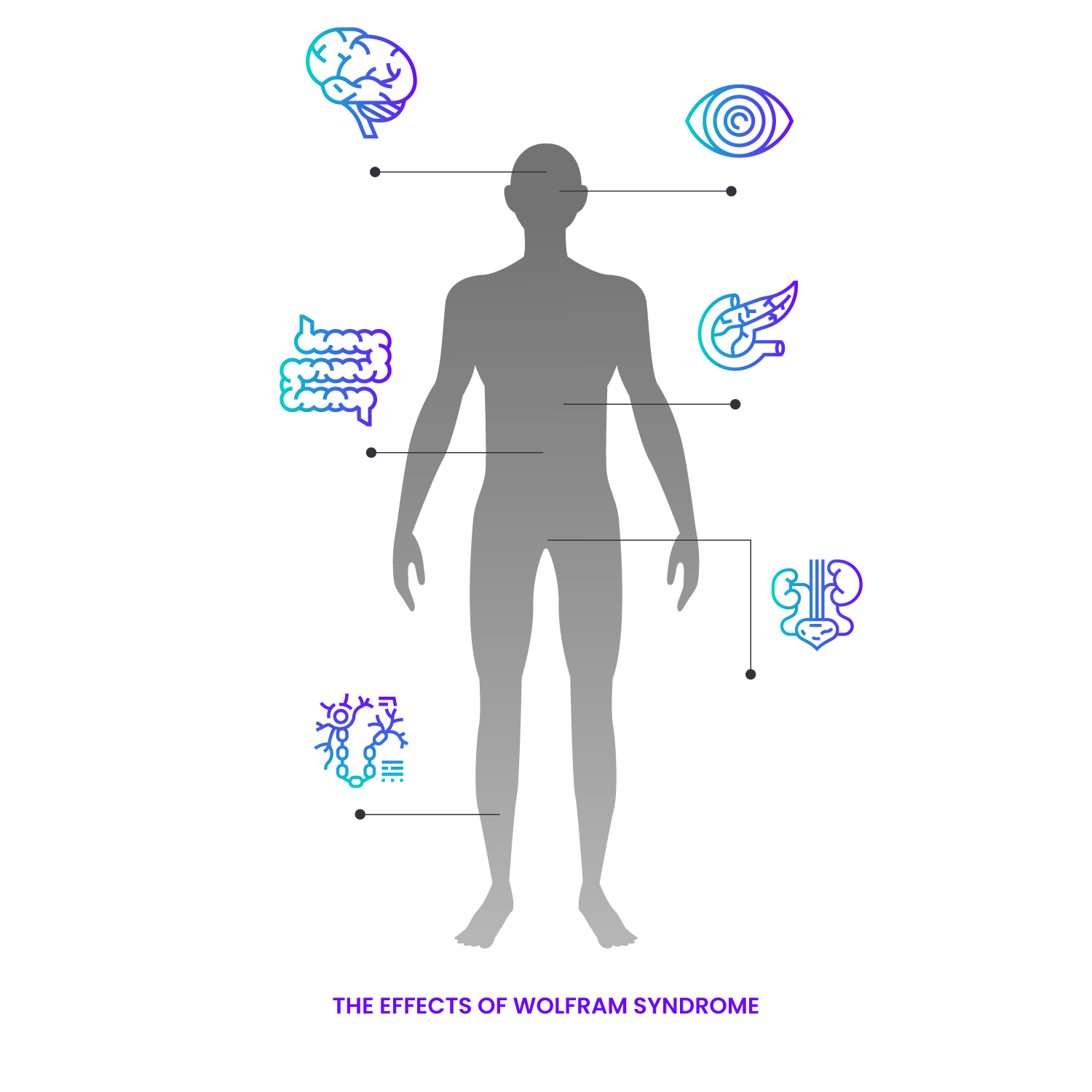
Wolfram syndrome is a rare, severe, autosomal recessive neurodegenerative disease that progressively affects several organs. The disease is characterized by the combination of diabetes insipidus, diabetes mellitus, optic atrophy, deafnessand progressive neurodegeneration.
The first symptoms usually appear during the first decade of life, and the diseaseprogresses towards central respiratory failure caused by massive cerebralatrophy. The outcome of the disease is fatal.
Affecting nearly 30,000 people worldwide, there is currently no specific treatment for this disease.
Wolfram syndrome
Advancing novel treatments to better support patients living with neurodegenerative and rare diseases
Wolfram syndrome is a rare, severe, autosomal recessive neurodegenerative disease that progressively affects several organs.
The disease is characterized by the combination of diabetes insipidus, diabetes mellitus, optic atrophy, deafnessand progressive neurodegeneration.
The first symptoms usually appear during the first decade of life, and the diseaseprogresses towards central respiratory failure caused by massive cerebralatrophy.The outcome of the disease is fatal.
Affecting nearly 30,000 people worldwide, there is currently no specific treatment for this disease.
Alzheimer disease
Advancing novel treatments to better support patients living with neurodegenerative and rare diseases
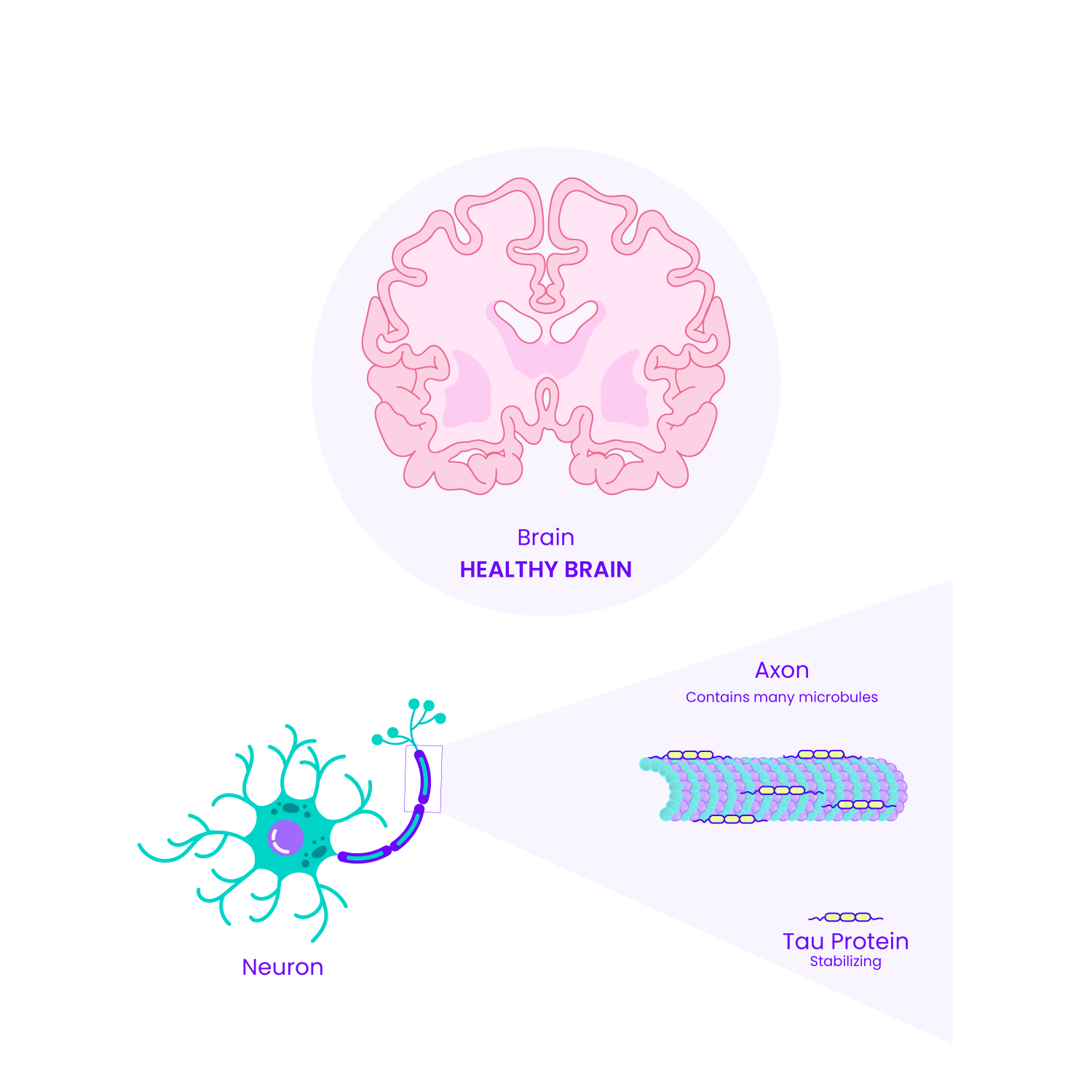
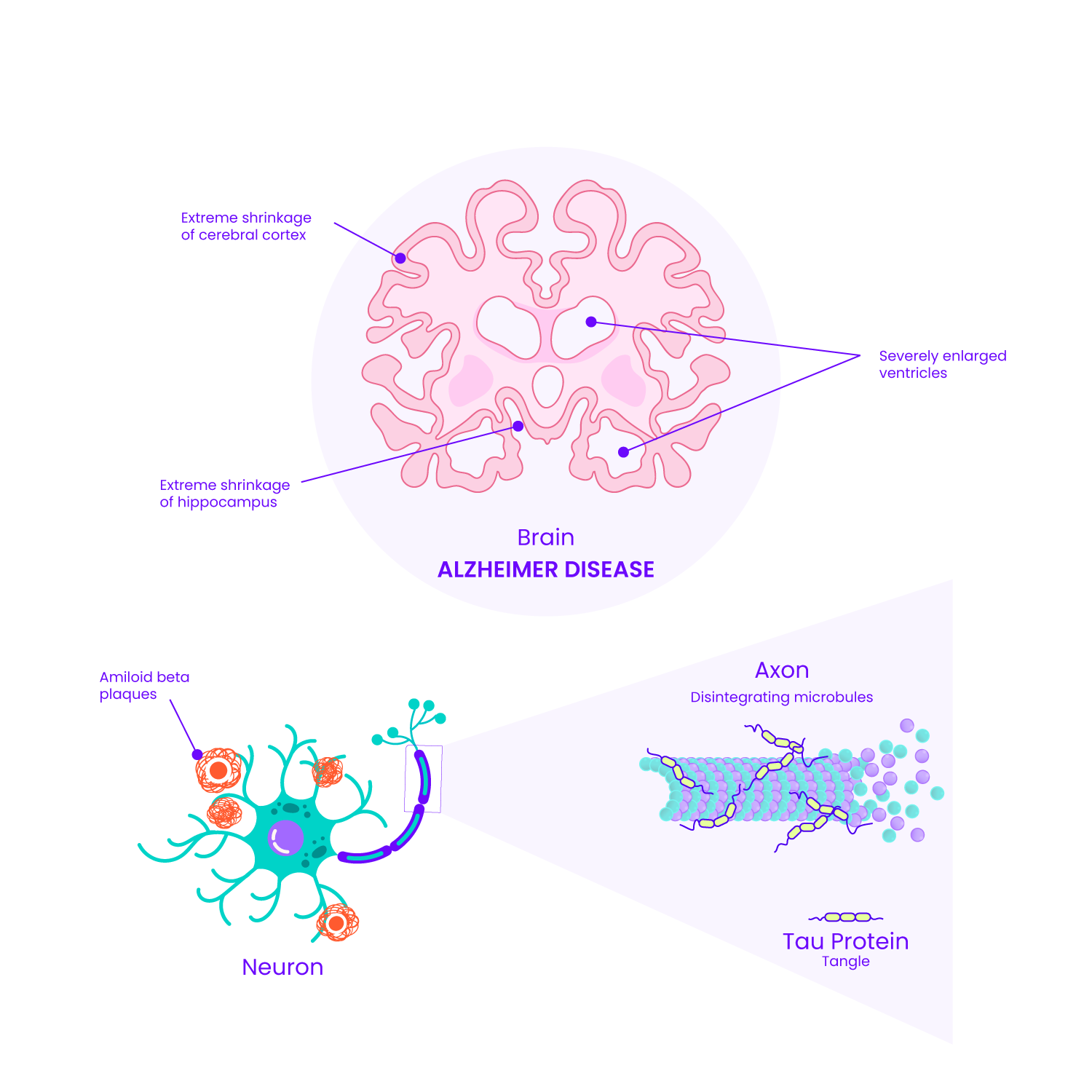
Alzheimer’s disease is a neurodegenerative disorder characterized by progressive and irreversible damage to brain function, with a slow but inexorable loss of nerve cells, or neurons. The disease develops insidiously over many years, without any apparent clinical signs. When they do occur, the disorders in patients are varied and include loss of cognitive functions (memory, language, reasoning), motor functions (movements, balance, everyday gestures), and behavioral functions (inappropriate behavior in a given situation, autonomy). These disorders can change over time in the same person, but the progression is irreversible. Brain functions gradually decline, changing the family and social lives of those affected and causing a severe loss of independence
Alzheimer’s disease affects more than 900,000 people in France each year, with more than 225,000 new cases, the symptoms of which vary and the frequency of which increases with age. Pathological signs found in patients’ brains include senile plaques, neurofibrillary tangles, and generalized neuroinflammation, which the latest therapeutic treatments aim to reduce.
Alzheimer disease
Advancing novel treatments to better support patients living with neurodegenerative and rare diseases
Alzheimer’s disease is a neurodegenerative disorder characterized by progressive and irreversible damage to brain function, with a slow but inexorable loss of nerve cells, or neurons. The disease develops insidiously over many years, without any apparent clinical signs. When they do occur, the disorders in patients are varied and include loss of cognitive functions (memory, language, reasoning), motor functions (movements, balance, everyday gestures), and behavioral functions (inappropriate behavior in a given situation, autonomy). These disorders can change over time in the same person, but the progression is irreversible. Brain functions gradually decline, changing the family and social lives of those affected and causing a severe loss of independence.
Alzheimer’s disease affects more than 900,000 people in France each year, with more than 225,000 new cases, the symptoms of which vary and the frequency of which increases with age. Pathological signs found in patients’ brains include senile plaques, neurofibrillary tangles, and generalized neuroinflammation, which the latest therapeutic treatments aim to reduce.
Contact Us
Get in touch with us!